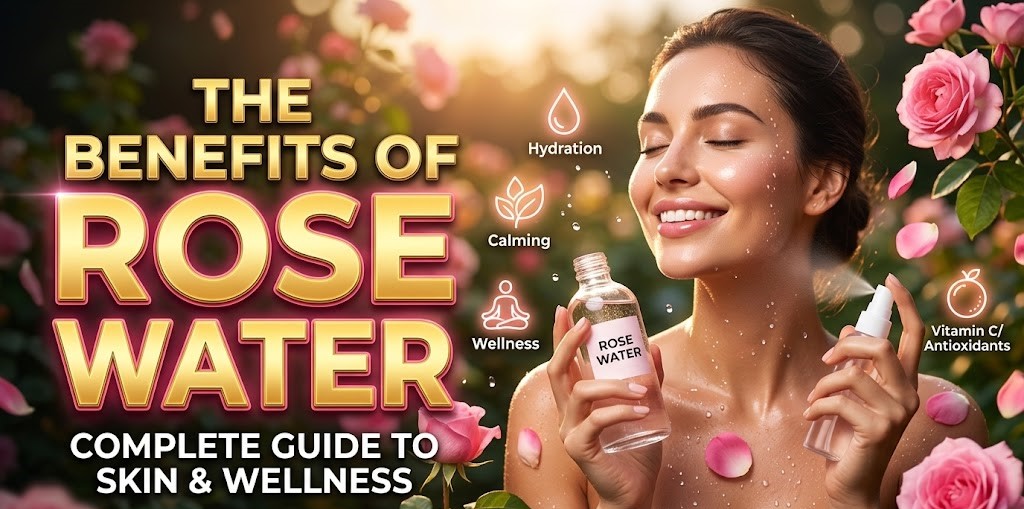

Rose water, created by distilling rose petals with steam, has been a staple in beauty and culinary traditions since the Middle Ages. Beyond its enchanting fragrance, it contains powerful antioxidant, anti-inflammatory, and antimicrobial compounds that offer a range of health-supporting effects.
Key Benefits of Rose Water
1. Soothes Skin Irritation
Rose water is rich in phytonutrients that provide anti-inflammatory properties. A 2018 study suggests that applying rose water to the skin can reduce inflammation following sun exposure. Many people also use it to soothe the symptoms of eczema and rosacea.
2. Reduces Redness and Discoloration
Its anti-inflammatory nature helps reduce skin puffiness and redness. It is frequently used as a natural toner to improve complexion. Its mild antibacterial properties may also help manage certain types of acne by reducing unhealthy bacteria on the skin’s surface.
3. Supports Graceful Aging
Rose water is a common ingredient in anti-aging mists and sprays. Research indicates it may help reduce:
- Fine lines and wrinkles
- Damage caused by UV rays
- Oxidative stress on skin cells
4. Heals Cuts, Scars, and Burns
Due to its antiseptic properties, rose water can help wounds heal faster and minimize the risk of infection. While it shouldn’t replace medical-grade ointments, it provides a gentle, supportive layer for minor skin injuries.
5. Relieves Sore Throats and Mouth Sores
Anecdotally used for sore throats, a 2022 study also showed that mouthwash containing rose water was effective in managing oral mucositis (painful mouth sores) in patients undergoing radiation therapy for cancer.
How to Incorporate Rose Water Into Your Routine
Rose water is versatile and can be used topically, aromatically, or even ingested.
| Method | Application |
| Facial Toner | Apply to the face with a cotton pad after cleansing to balance the skin. |
| Aromatherapy | Mist it on your wrists or pillow to improve sleep quality and reduce anxiety. |
| Culinary Use | Add a few drops to hibiscus tea, yogurt, or salads for a floral flavor profile. |
| Wound Care | Dab onto minor cuts or burns to soothe and prevent infection. |
Forms and Safety
You can easily make your own rose water at home or purchase it in various forms:
- Pure Distillate: Best for toners and facial mists.
- Tea/Edible Grade: Safe for consumption in jams and beverages.
- Essential Oil: Used primarily for aromatherapy and diffusers.
Potential Risks:
Rose water is generally considered safe for all skin types. However, if you have sensitive skin, perform a patch test first. If you experience stinging, redness, or a rash, you may be allergic and should discontinue use immediately.
Also Read : Face Serums 101: How to Shortlist the Best Skin Glow Serum