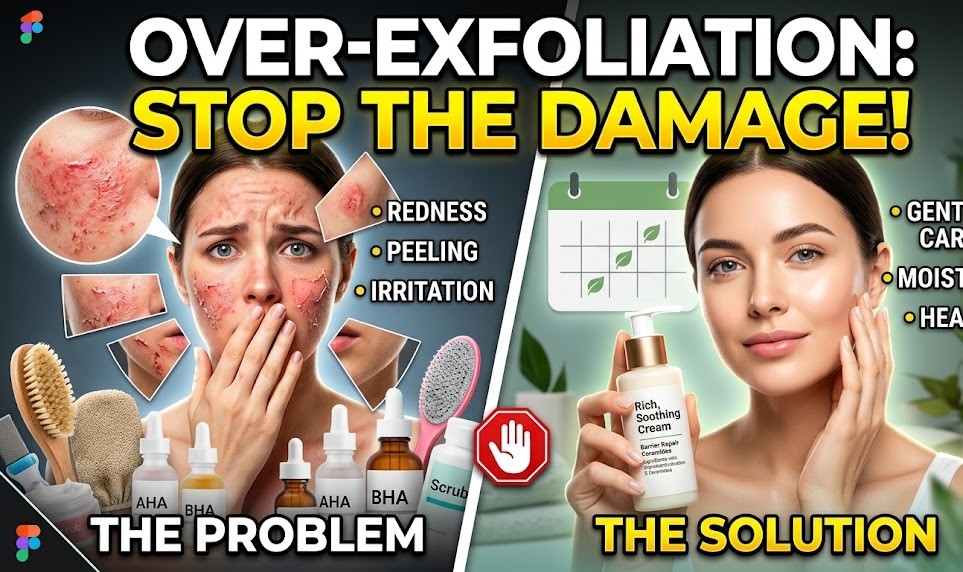

Exfoliation is often seen as the fastest route to glowing skin. However, when exfoliation crosses the line into excess, it silently damages your skin barrier, triggers breakouts, and worsens the very concerns you are trying to fix. Understanding the balance between a healthy glow and barrier damage is essential for long-term skin health.
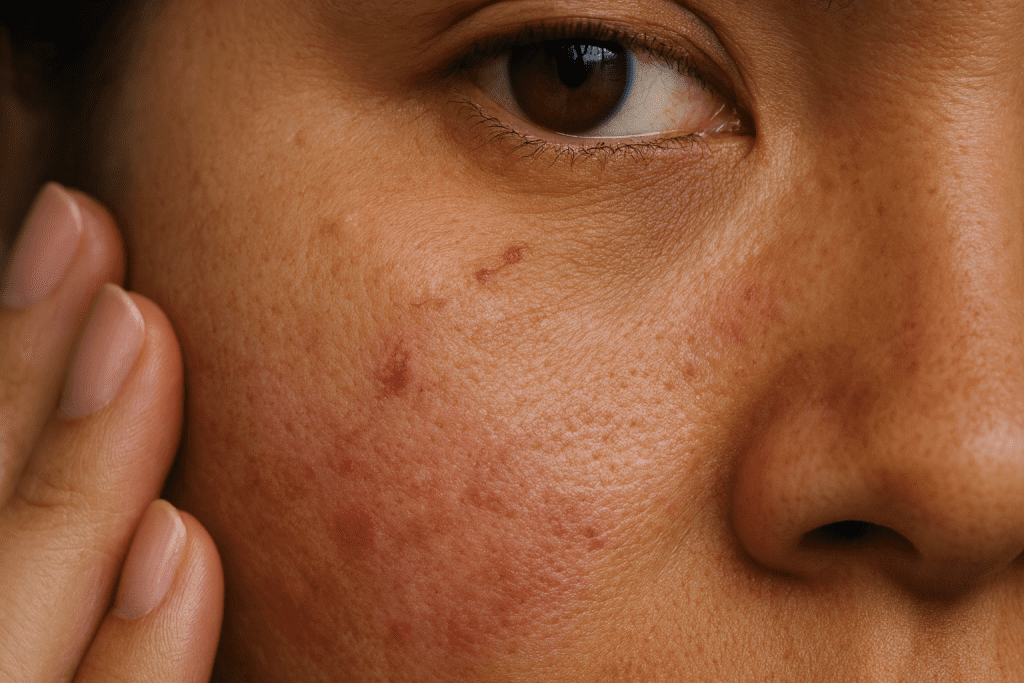
What Is Over-Exfoliation?
Over-exfoliation occurs when the skin is exfoliated too frequently, too aggressively, or with products too strong for its tolerance. This process strips away not just dead skin cells, but also the healthy cells and vital lipids that make up your skin barrier.
The Role of Your Skin Barrier:
- Moisture Retention: Prevents transepidermal water loss (TEWL).
- Protection: Acts as a shield against bacteria and pollution.
- Balance: Maintains the skin’s natural pH level.
Early Warning Signs You’re Doing Too Much
Catching these signals early can prevent long-term inflammatory damage:
- Post-Cleanse Tightness: Skin feels stretched or dry immediately after washing.
- Lingering Redness: Flushing that lasts for hours or reappears daily.
- Product Stinging: Basic moisturizers or sunscreens suddenly burn upon application.
- “Plastic” Sheen: Skin looks shiny or glossy but feels thin, fragile, and lacks elasticity.
Over-Exfoliation vs. Purging
It is common to confuse these two, but their treatments are opposites.
| Feature | Purging | Over-Exfoliation |
| Cause | Introduction of active ingredients (Retinol, Acids). | Excessive use of scrubs or chemical peels. |
| Location | Breakthroughs in usual “problem” areas. | Redness and bumps in new, unusual areas. |
| Sensation | Little to no discomfort. | Stinging, burning, and raw sensitivity. |
| Duration | Resolves in 4–6 weeks as skin adjusts. | Worsens until the routine is stopped. |

How to Stop and Heal: The Recovery Plan
Step 1: The “Skin Fast”
Stop all “active” products immediately. This includes AHAs (Glycolic, Lactic), BHAs (Salicylic), Retinoids, Vitamin C, and physical scrubs. Your skin needs a minimum of 2–4 weeks to restore its lipid layer.
Step 2: Rebuild with Barrier-Supporting Ingredients
Switch to a minimalist routine focused on repair:
- Ceramides: Essential lipids that “glue” skin cells together to restore the barrier.
- Niacinamide: Soothes inflammation and boosts the production of barrier-strengthening proteins.
- Hyaluronic Acid: Attracts deep hydration without causing irritation.
- Panthenol (Vitamin B5): A powerful humectant that supports the skin’s natural healing process.
Step 3: Safe Reintroduction
When your skin no longer stings and feels supple again, reintroduce exfoliants slowly—starting with once a week and never on the same night as a retinoid.
Also Read : Best Skincare Products for Large Pores: Smooth Your Skin