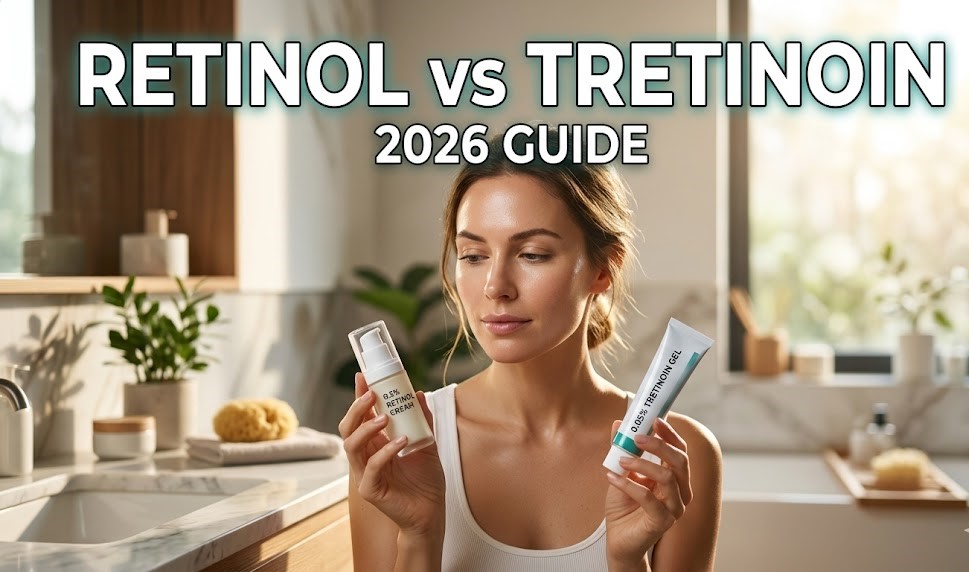

In the world of 2026 skincare, we have more high-tech gadgets and “miracle” peptides than ever, but the heavy lifting is still done by the classics: Retinoids. If you’ve spent any time looking for the “Holy Grail” of anti-aging or acne care, you’ve likely bumped into the names Retinol and Tretinoin.
While they are cousins in the Vitamin A family, they aren’t twins. Think of Retinol as the reliable marathon runner and Tretinoin as the Olympic sprinter. Both will get you to the finish line of glowing skin, but the speed and intensity are vastly different.
The Biological Conversion: Why Strength Matters
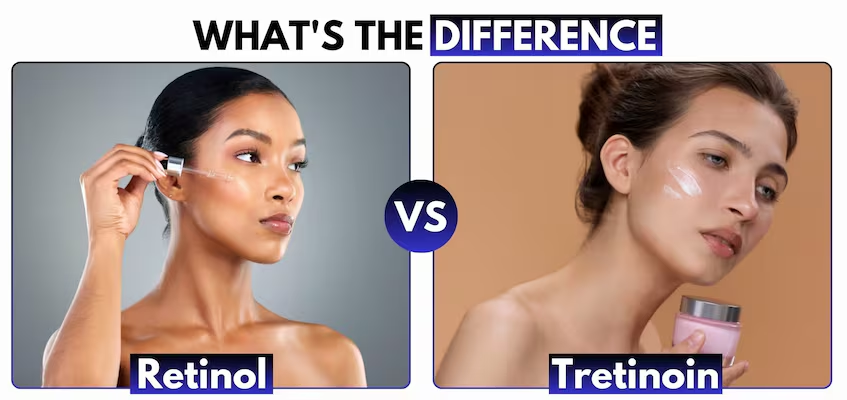
The fundamental difference between these two is how much work your skin has to do to use them. Your skin cells can only “read” the instructions provided by Retinoic Acid.
- Tretinoin is pure retinoic acid. It hits the ground running the moment it touches your face.
- Retinol is a precursor. Once applied, your skin has to convert it into retinaldehyde, and then finally into retinoic acid.
Because of this “translation” process, Retinol is naturally weaker and gentler, whereas Tretinoin is a high-octane prescription.
The Comparison Matrix
| Feature | Retinol | Tretinoin (Retin-A) |
| Availability | Over-the-counter (OTC) | Prescription Only |
| Strength | Moderate / Lower Concentration | High / Concentrated |
| Speed of Results | Gradual (months) | Fast (weeks to months) |
| Irritation Potential | Low to Moderate | High (The “Retinoid Purge”) |
| Best For | Beginners, Sensitive Skin, Prevention | Stubborn Acne, Deep Wrinkles, Repair |
The Retinoid Potency Equation
To understand why Tretinoin is so much more effective (and irritating), we can look at the Potency Efficiency Index (Peff). This represents the bioavailable retinoic acid (A) relative to the number of enzymatic conversion steps (n) required by the skin:
Peff=n+1A
In this model, for Tretinoin, n=0, leading to maximum potency. For Retinol, n=2, which significantly dilutes the immediate biological impact but makes it much more tolerable for a 2026 daily routine.
Shared Benefits: The Glow-Up Protocol
Regardless of which one you choose, both retinoids offer a suite of benefits that have been the gold standard since the 1970s:
- Collagen Production: They signal your skin to produce more collagen, improving elasticity.
- Cell Turnover: They speed up the process of shedding dead skin cells, which helps clear acne and fade sun spots.
- Texture Smoothing: Long-term use reduces the appearance of fine lines and “liver spots.”
Risks and the “Retinoid Ugly Phase”
I’ll be direct: your skin might get worse before it gets better. This is often called purging. Both Retinol and Tretinoin carry risks:
- Irritation: Redness, peeling, and dryness are common, especially around the eyes and mouth.
- Photosensitivity: Retinoids make your skin highly sensitive to the sun. Even in 2026, Sun Protection is your non-negotiable partner.
- Hyperpigmentation: Paradoxically, if not used with sunscreen, retinoids can lead to darker patches, particularly in darker skin tones.
Conclusion: Which One Should You Pick?
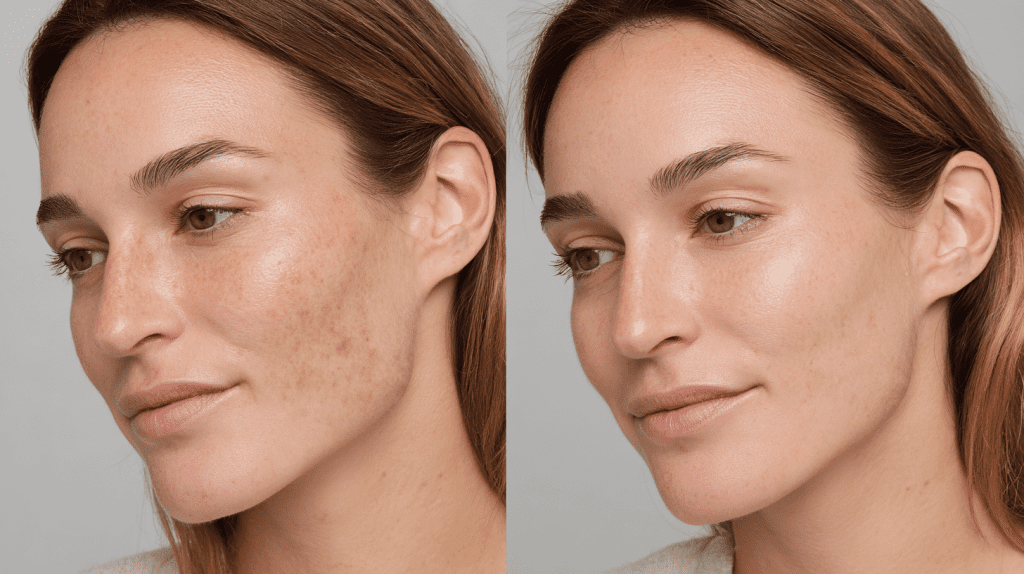
- Start with Retinol if: You are new to retinoids, have sensitive skin, or are mainly looking for “pro-aging” prevention. You can find excellent options at the drugstore or through modern skincare platforms.
- Graduate to Tretinoin if: You’ve used high-percentage Retinol with no results, or if you are battling active, stubborn acne. Since it’s a prescription, you’ll need a quick chat with a dermatologist first.
Whichever you choose, remember the golden rule of 2026 skincare: Start slow and stay hydrated.
Also Read : Skincare Routine for Eczema-Prone Skin: Soothe & Protect