
Living with rosacea often feels like walking a tightrope. One minute your skin is calm, and the next, a stray drop of fragrance or a gust of wind triggers a flare-up that stays for days. In 2026, we’ve moved beyond “covering up” and into the era of barrier restoration.
According to board-certified dermatologists, the right skin care routine doesn’t just make you feel more comfortable—it actually improves the results of your medical treatments. Here is the definitive guide to managing rosacea-prone skin with a gentle, science-backed touch.
1. Audit Your Ingredient List
Rosacea skin is notoriously hypersensitive. Many “holy grail” ingredients in the anti-aging world are actually “no-go” zones for those with redness.
| Avoid These Irritants | Why? |
| Alcohol & Menthol | Dries out the skin and triggers vascular flushing. |
| Glycolic & Lactic Acid | Disrupts the already fragile skin barrier. |
| Fragrance | The #1 cause of contact dermatitis and stinging. |
| Sodium Lauryl Sulfate (SLS) | A harsh surfactant that strips away essential lipids. |
The Goal: Choose products labeled “fragrance-free” (not unscented) and “non-comedogenic.” When in doubt, a thick cream is almost always better for your barrier than a thin lotion or gel.
2. Master the “Fingertip” Cleanse
In 2026, we are officially retiring the washcloth. Mechanical exfoliation is a major trigger for rosacea.
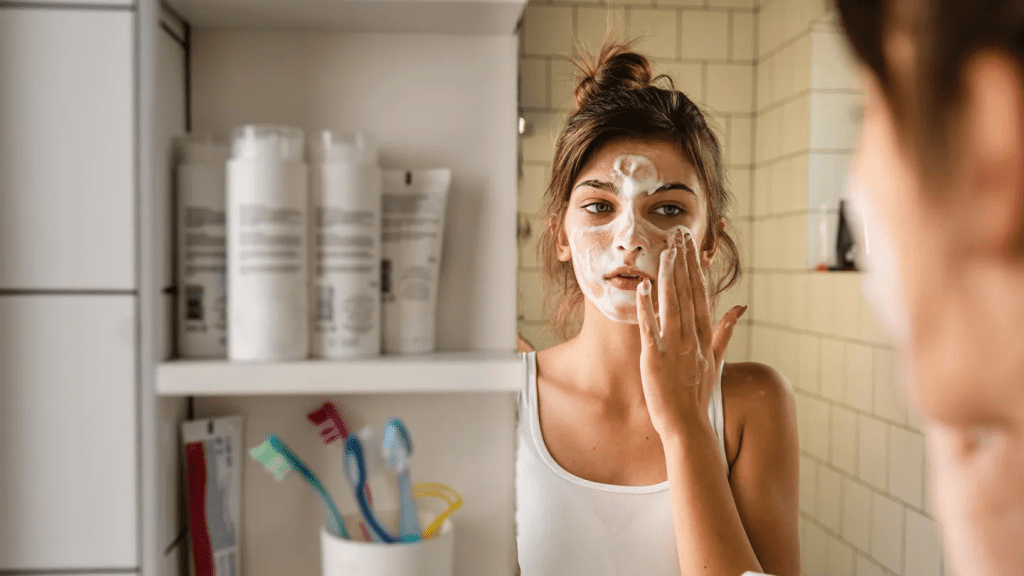
- The Method: Use a mild, soap-free cleanser. Apply it gently using only your fingertips in a circular motion.
- The Temperature: Rinse with lukewarm water. Hot water causes vasodilation (redness), while ice-cold water can shock the skin.
- The Dry: Gently pat your face dry with a clean, 100% cotton towel. Never rub.
3. Moisturize to Reduce $TEWL$
Moisturizing is non-negotiable, even if your skin feels oily. Rosacea is often linked to an increase in Transepidermal Water Loss ($TEWL$). By applying a rosacea-friendly moisturizer, you trap water in the stratum corneum and restore essential lipids.
If you are using a prescription gel (like metronidazole), apply your medication first, wait for it to dry, and then layer your moisturizer on top. Studies show this combination significantly reduces peeling and roughness.
4. Protect Your Skin from UV Triggers
The sun is the most common trigger for a rosacea flare-up across all skin tones. In 2026, the Skin Cancer Foundation emphasizes that UV radiation doesn’t just cause burns—it causes inflammation.
- Broad-Spectrum SPF 30+: Look for mineral sunscreens containing Zinc Oxide or Titanium Dioxide.
- Darker Skin Tones: To avoid a “white cast,” look for tinted mineral sunscreens or micronized formulas.
- Silicones: Ingredients like Dimethicone or Cyclomethicone can actually help protect sensitive skin from irritation.
5. The “Wait and See” Testing Rule
Before committing to a new product, perform a patch test. Apply a small amount near your ear or jawline for several days. If your skin stings, burns, or turns red, it’s a sign to move on. Following official AAD testing guidelines can save you from a full-face flare-up.
6. Stop the Scrubbing
If you are still using a facial sponge or exfoliating beads, this is your sign to stop. Anything that creates friction can lead to a flare. Dermatologists recommend skipping all forms of chemical and physical exfoliation until your redness is under medical control.
7. Camouflage with Care
If you want to mask redness, color correction is your best friend:
- Green Tint: Neutralizes intense redness.
- Yellow Tint: Masks general discoloration on light to dark skin tones.
- Texture: Stick to water-based or powder makeup, as these are less likely to clog pores or require harsh scrubbing to remove at the end of the day.
Also Read : Jojoba Oil For Acne: 4 Benefits And How To Use It