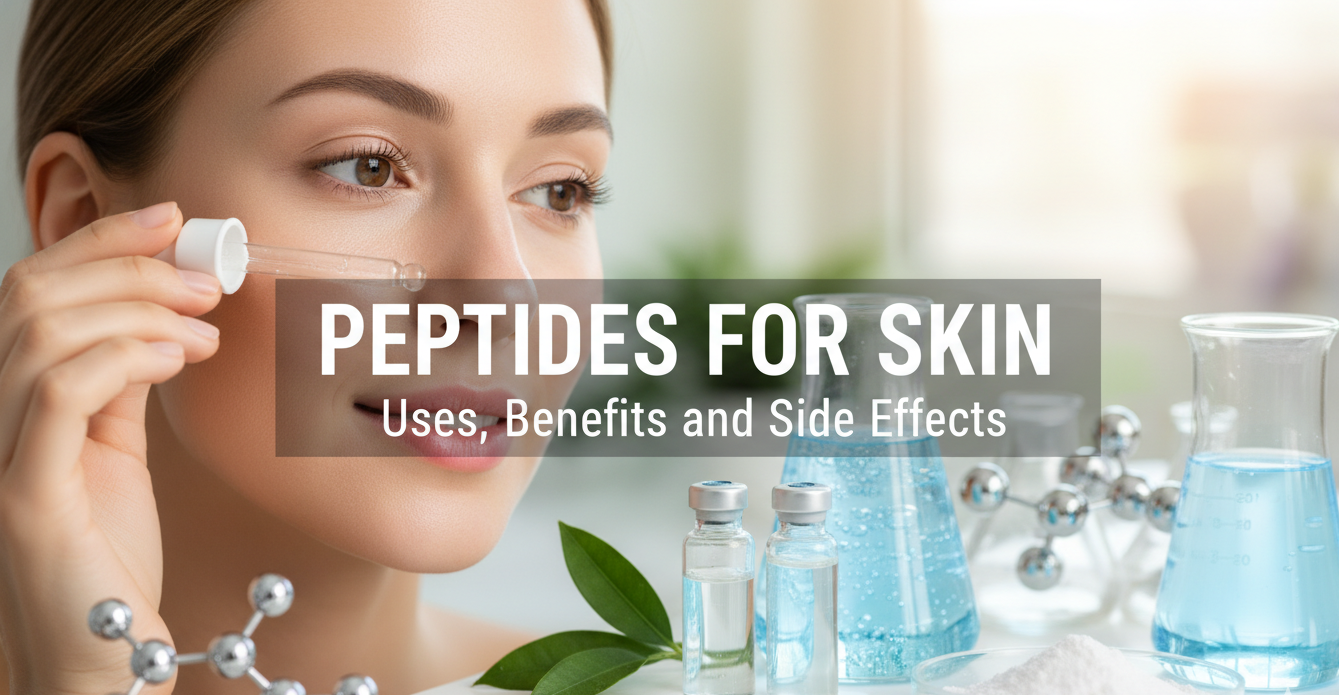

Peptides: This popular skincare ingredient is all the rage right now, and people think it can help your skin feel better from the inside out. Some things are overhyped, but some are useful, and their performance is amazing.
Peptides are one of these ingredients that are good for anti-aging and can also aid with smooth skin, hydration, and skin repair. There has been a lot of research on peptides and how they can help the skin in amazing ways.
What are Peptides?
Peptides, which are also called polypeptides, are found naturally in the skin and are used in many skin care treatments.
Before we talk about peptides, let’s first talk about amino acids. Proteins and peptides are made up of strings of amino acids, which are the building blocks of the body that are linked together by peptide bonds. The main distinction is that peptides have shorter chains of amino acids than proteins do.
Our skin needs proteins, especially collagen, which is made up of three peptide chains that can help your skin make more collagen, making it look firmer and younger.
If you don’t have enough peptides, your skin can get damaged. This can change the texture of your skin, make fine lines and wrinkles develop, make it less firm, and make it less able to bounce back like it used to.

ALSO READ: Is Bubble Skincare Good for Kids?
Benefits of peptides:
Many people choose to eat foods that are high in collagen or take collagen supplements because the molecules of collagen are thought to be bigger and easier for the skin to absorb.
No matter where you put peptides on your body, they will easily be absorbed. It’s been known to have many benefits, such as:
1. Help make wrinkles and fine lines less noticeable:
Collagen is an important fibrous protein for our bodies’ connective tissues. Peptides can help your skin look fuller by making your body make more collagen. When your skin is firm and plumped up, fine lines and wrinkles are less noticeable. This is because peptides help your body make more collagen.
2. It does a great job of making the skin’s barrier stronger:
When you have acne, eczema, or rosacea, your skin barrier can become weak and crack. Peptides found in skin care products can help strengthen the skin’s barrier by keeping it healthy and whole.
The peptides are just the right size to get through the top layer of skin and start working their way down to the deeper layers.
3. Help the body make more collagen:
Collagen can be made by our bodies naturally in the skin and other places. As we age, our bodies make less collagen. Collagen is a type of protein that is important for skin health because it gives skin its structure. The process works when peptides are put on the skin. This is because peptides tell the skin’s cells to make more collagen, which makes the skin healthier.
4. It can fight free radicals:
Antioxidants in peptides can help soothe and calm your skin by protecting it from damage caused by free radicals, which can be UV rays, dirt, pollution, and other environmental aggressors.
5. It helps make skin smooth and even out its tone:
Higher collagen production leads to healthier, clearer, and fuller skin. This creates balance in both areas, which helps even out skin tone and improve the texture of the skin. Adding peptides to your skin care routine can help with these common skin problems.
6. You can help keep moisture in the skin by:
A drop in collagen production can also make skin very dry; this usually happens as people get older. Peptides help the body make more collagen, which helps keep the skin’s moisture inside.
7. Make your skin firmer:
As we already said, peptides tell the cells in the skin to make more collagen and stop nerve signals that can make wrinkles and fine lines from moving muscles less noticeable. That’s why peptides are so popular and are also thought of as a possible alternative to Botox that can be put on the skin.
8. It may help clear up breakouts:
A few peptides are known to kill bacteria that cause acne because they are antimicrobial. If you use a moisturiser or serum with peptides, it will help clear up your skin.
How do peptides work in your skincare routine?
People are using peptides more and more these days. You can find them in a lot of different skin care products, like serums, moisturisers, creams, face washes, masks, and more. What kind of skin you have, what skin problems you have, and which product works best for you will determine how you use peptides.
Peptides work best when you leave them on your skin for a long time, like in a moisturiser or serum, so they can get into the deeper layers of your skin and do their job.
That being said, why do we need more peptides if our bodies already make them? It’s all linked to getting older, say experts. The rate at which you lose collagen each year drops to 1% after age 30. The skin’s natural communication processes also slow down.
It’s a little trickier to explain how peptides work. Our bodies use peptides as signals to start the healing process by making more collagen where it’s needed the most. For example, if you hurt your knee and are trying to heal, those peptides will tell your body to put all of its healing power into that joint.
This also applies to the ageing process of the skin. If you are prematurely ageing, those peptides will tell the skin cells to make more collagen and even hyaluronic acid. This will make the skin fuller and restore the healthy skin barrier.
Adding exogenous peptides to your skin care routine in the form of a moisturiser or serum tricks your skin into thinking that there is a wound or injury in that area. This tells your body to start the process of boosting collagen.
Because there are so many peptides, not all of them are good for skin care. There are peptides that work better than others. For instance, enzyme inhibitor peptides slow down the skin’s natural breakdown of collagen, and carrier peptides bring minerals to the skin to make collagen stronger.
In order to help elastin, collagen, and other proteins, signal peptides send messages to different parts of the skin. Neurotransmitter peptides stop the release of chemicals that make muscles contract. This helps get rid of wrinkles and fine lines.
Side effects of peptides
People often think that peptides can do miracles. Some even say that they work like Botox because neurotransmitter peptides are known to temporarily block chemicals that make muscles contract.
- When it comes to anti-aging, AHAs, retinol, and other ingredients are more backed up by science than peptides.
- Skin may not always look better after using certain types of peptides.
- To get better skin, you should talk to your dermatologist before using peptides because the word “peptide” is sometimes used as a marketing term.
- Peptides can sometimes cause allergies like itching, rashes, or skin that is too sensitive to touch.
Conclusion:
For many skin problems, peptides are a great addition to your routine, but a lot more research needs to be done on them and how they work. Picking skin care products with peptides should be done carefully based on what your skin needs.