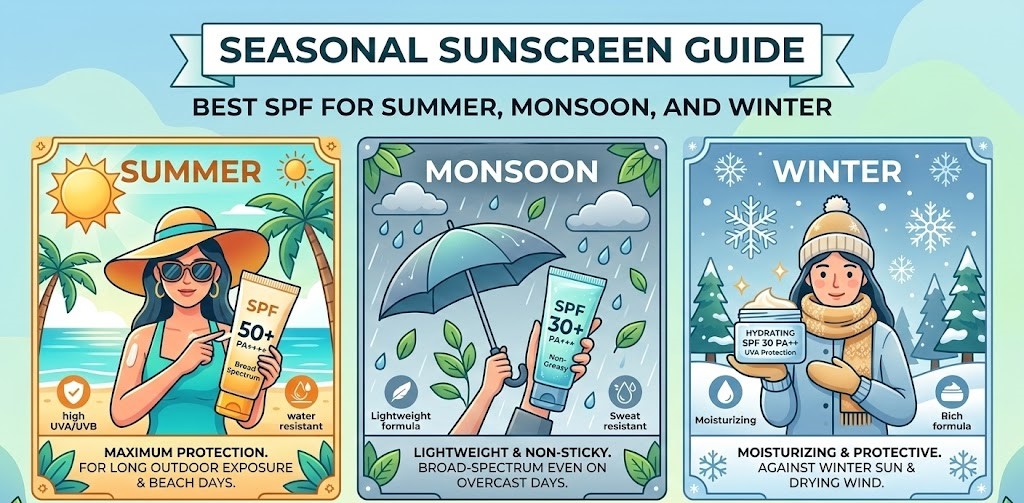

Sunscreen is not just a seasonal accessory; it is a year-round essential. However, the climate plays a significant role in how your skin behaves. The best sunscreen for summer may feel too drying in the winter, while a rich winter cream can lead to clogged pores during the humid monsoon. Adapting your SPF to the weather ensures your skin remains protected, comfortable, and healthy 365 days a year.
🗓️ Seasonal Sunscreen Strategy
Your skin’s needs evolve as the temperature and humidity shift. Use this guide to rotate your products effectively:
| Season | Skin Challenge | Recommended Texture | Key Features |
| Summer | Intense UV, Sweat, Oil | Gel or Ultra-Light Lotion | Matte finish, sweat-resistant, non-greasy. |
| Monsoon | High Humidity, Clogged Pores | Oil-Free Gel | Non-comedogenic, lightweight, fast-absorbing. |
| Winter | Dryness, Cold Winds | Hydrating Cream or Serum | Infused with Hyaluronic Acid or Vitamin E. |
🔍 Why Seasonal Rotation Matters
UV rays are constant, but your skin barrier’s reaction to the environment changes. Using the same formula all year can lead to various issues:
- Summer: Heavy creams can trap heat and sebum, leading to “greasy buildup.”
- Monsoon: Humidity traps dirt; a heavy SPF can cause “monsoon breakouts.”
- Winter: Skipping SPF or using a mattifying gel can cause “over-drying” and sensitivity.
🛡️ Essential Sunscreen Rules (Year-Round)
Regardless of the season, these three rules remain the same:
- Broad Spectrum: Always choose an SPF that protects against both UVA (Aging) and UVB (Burning) rays.
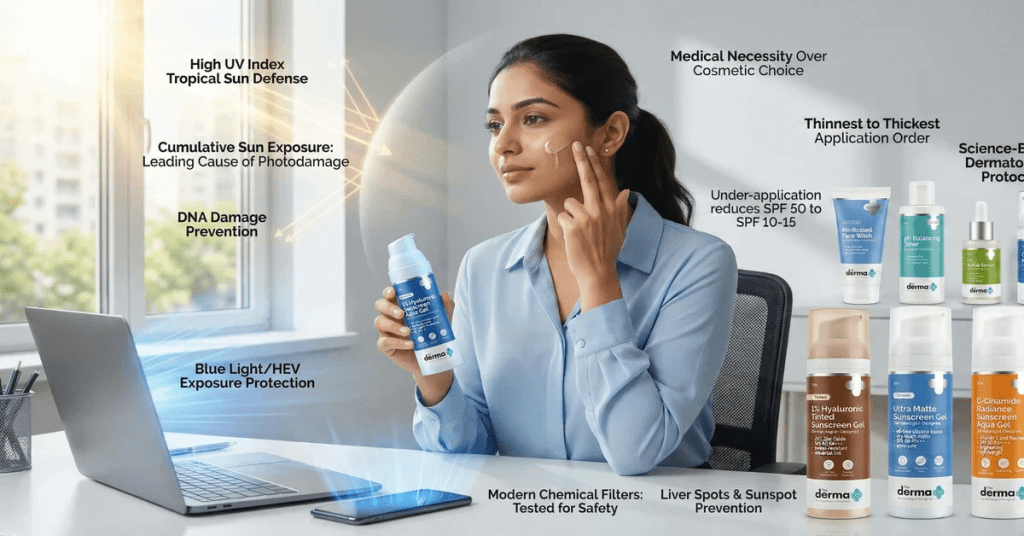
- Indoor Protection: UVA rays penetrate glass. If you are sitting near a window in 2026, you still need protection.
- Reapplication: Reapply every 2–3 hours. Heat and sweat break down active filters, rendering them ineffective over time. You can learn more about UV ray protection to see how sunlight impacts indoor environments.
🔗 Expert Skincare Resources
- The Spruce: Protecting Your Skin from Indoor UV: Learn how different window types impact UV penetration and your skin health.
- Better Homes & Gardens: Natural Ingredients for Skin Protection: Discover botanicals like Aloe Vera and Raspberry Seed oil that support sun protection.
- Forbes Home: Understanding Performance Ingredients: While focused on home, this guide explains how performance materials block UV—principles that apply to high-tech sunscreens.
- Architectural Digest: Designing Spaces with Natural Light: A look at how modern architecture prioritizes light, and why SPF is the most important part of your indoor routine.
Conclusion
Building a year-round sunscreen habit is the most effective way to prevent premature aging, pigmentation, and skin damage. By switching your texture—moving from ultra-light gels in the humid monsoon to nourishing creams in the dry winter—you ensure your skin stays balanced. Remember, the best sunscreen isn’t just the one with the highest SPF; it’s the one you actually enjoy wearing every single day.
Also Read: The Best Moisturizers for Eczema-Prone Skin Reviewed