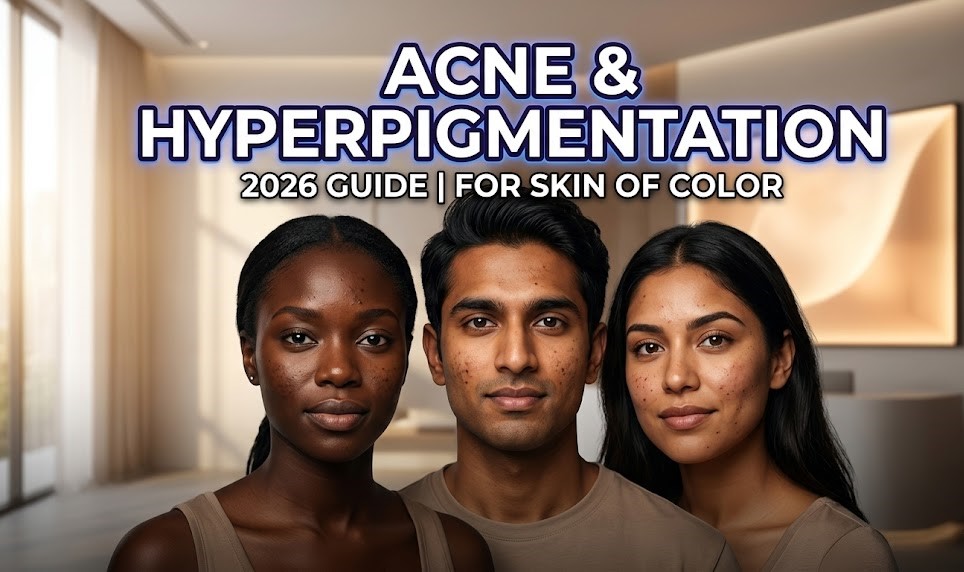

Managing acne when you have a melanin-rich complexion is like playing a game of chess: you aren’t just worried about the current move (the breakout); you’re anticipating the next five moves (the dark spots). In 2026, the term “Skin of Color” encompasses a beautiful spectrum—African, Asian, Latino, Mediterranean, Middle Eastern, and Native American—and while the acne itself is the same, the biological aftermath is unique.
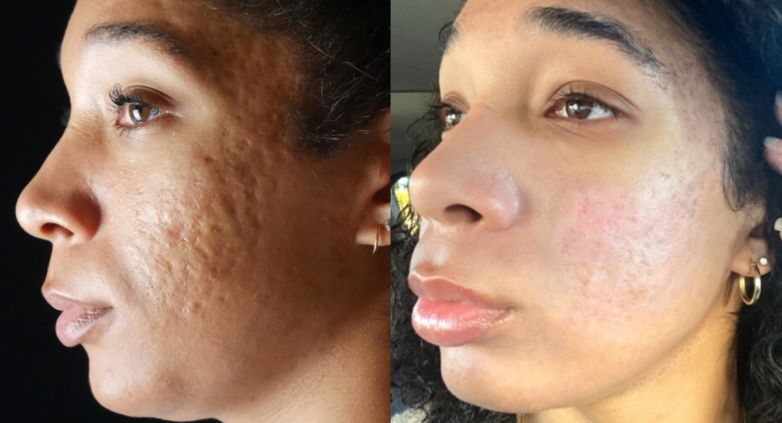
The PIH Problem: Why Darker Skin Reacts Differently
When skin with more melanin becomes inflamed by acne, it often triggers Post-Inflammatory Hyperpigmentation (PIH). While the pimple might last five days, the dark spot can last five months.
According to dermatological data:
- 65% of African Americans with acne experience PIH.
- 53% of Hispanics experience lingering dark patches.
- 47% of Asians report significant discoloration following a breakout.
- Additionally, individuals with skin of color are at a significantly higher risk for keloids (raised scars), particularly if inflammatory acne is left untreated.
The Clearance Equation: Balancing Actives
In 2026, we utilize a multi-pathway approach to treat both the bacteria and the pigment. We can represent the Acne Resolution Rate ($A_r$) as a balance of Bacterial Clearance ($B$) and Pigment Stabilization ($P$) against the level of Irritation ($I$):
$$A_r = \frac{B + P}{I + 1}$$
To maximize your $A_r$, you need to choose ingredients that kill acne-causing bacteria without causing the dryness that leads to more PIH.
| Ingredient | Role | 2026 Best Practice |
| Adapalene (0.1%) | Retinoid | Unclogs pores and prevents new lesions. |
| Benzoyl Peroxide | Antibacterial | Use 2.5% to avoid bleaching or excessive flaking. |
| Salicylic Acid | Exfoliant | Deep cleans pores; great for “pomade acne.” |
| Azelaic Acid | Dual-Action | Specifically targets both acne and dark spots simultaneously. |
Top 5 Resilience Tips for Melanated Skin
- Treat Early, Treat Twice: Do not wait for a “full breakout.” Treating early prevents the inflammation that causes permanent scarring. Always treat the active acne and the dark spot together.
- The “Non-Comedogenic” Mandate: Ingredients like cocoa butter and shea butter are great for the body but can be pore-clogging disasters for the face. Always look for labels that say “won’t clog pores.”
- Audit Your Haircare: “Pomade acne” is real. If you see breakouts strictly on your forehead or temples, your hair oil is likely the culprit. Switch to water or glycerin-based products for your edges.
- Gentleness is a Virtue: Scrubbing your face won’t “wash away” acne; it will only create micro-tears that lead to—you guessed it—more dark spots. Use only your fingertips and a mild cleanser.
- Sunscreen is the Finisher: PIH is darkened by UV rays. Even if you aren’t at the beach, daily SPF 30+ is the only way to ensure those dark spots actually fade.
The “Direct Truth” on Professional Procedures
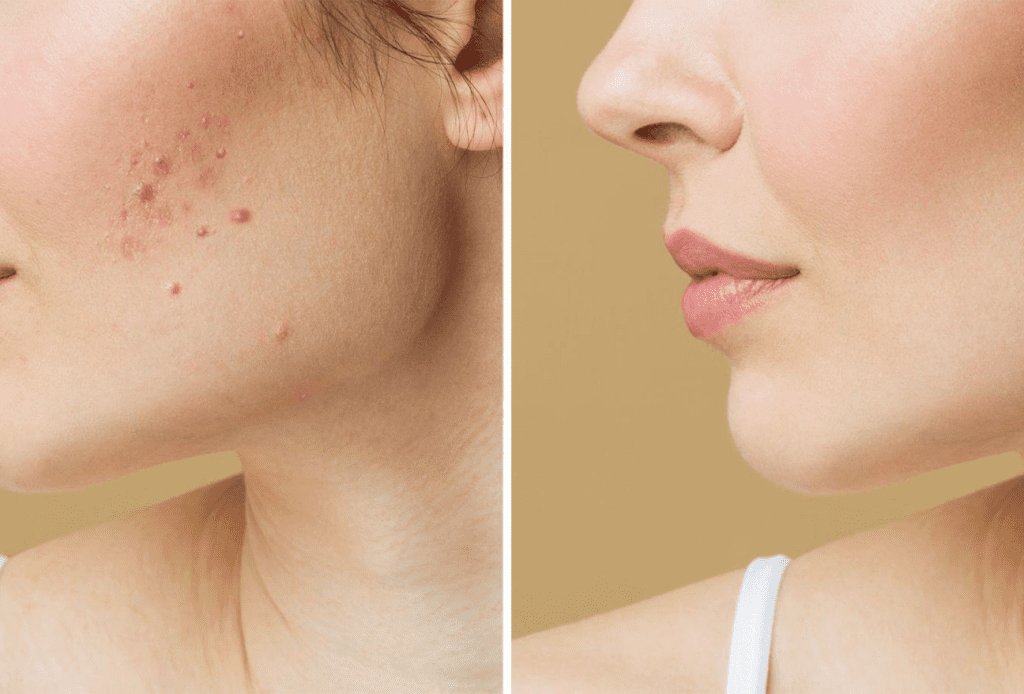
Be incredibly cautious with at-home chemical peels or lasers. In skin of color, an improperly managed laser can lead to permanent light spots (hypopigmentation) or severe burns. If you are seeking professional help, ensure your dermatologist has a specific portfolio in Ethnic Dermatology.
Peer-to-Peer Wisdom: Don’t pop it. I know it’s tempting, but in darker skin, a “pop” is a guaranteed invitation for a dark spot that will outstay its welcome by half a year.
Also Read : Collagen Decline Has More Consequences Than Just for Your Skin