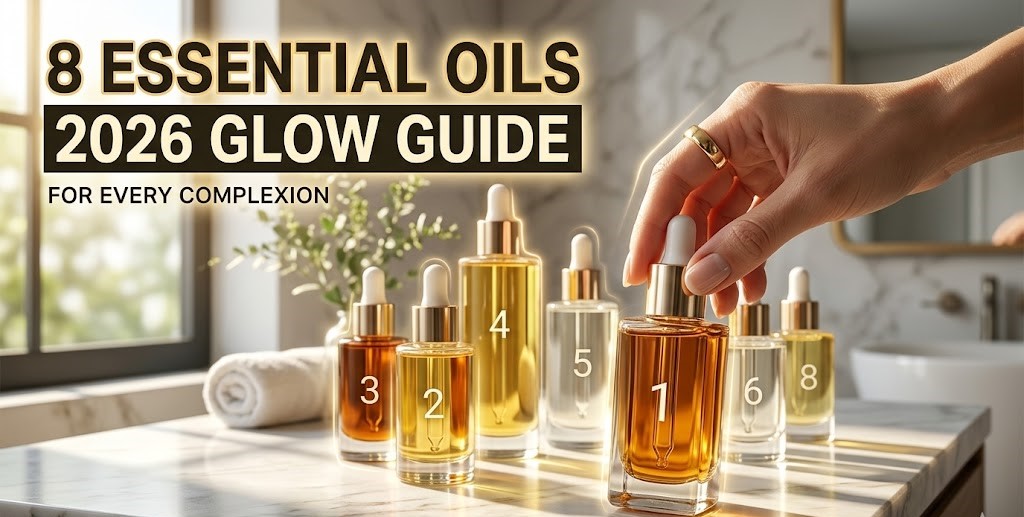

If your skin currently feels like a piece of parchment paper or looks about as bright as a rainy Monday in Pune, it’s time to talk about lipid replenishment. In 2026, we’ve moved past the fear of “putting oil on my face.” We now understand that a healthy skin barrier is essentially a well-organized fatty acid party.
Whether you’re battling a desert-dry forehead or trying to calm a localized breakout “civil war,” the right facial oil acts as the ultimate diplomat. Here is how to navigate the current 2026 oil landscape to achieve that “lit-from-within” radiance.
The Science of the “Glow Index”
In the world of 2026 aesthetic science, we evaluate an oil’s effectiveness based on its Glow Index (Gidx). This formula balances the Nutrient Density (N) and the Absorption Rate (A) against its Comedogenic (pore-clogging) Rating (C):
Gidx=C+1N×A
An ideal oil maximizes nutrition and absorption while keeping the pore-clogging potential at near-zero.
The 2026 Facial Oil Power List
1. Squalane: The Re-Balancer
Not to be confused with squalene (the unstable version), Squalane is a plant-derived superstar. It mimics your skin’s natural sebum so perfectly that your face won’t even realize it’s an “outside” product.
- Best for: All skin types (especially oily and acne-prone).
- 2026 Pro-Tip: Pat it on after your water-based serums to lock in hydration.
2. Rosehip Seed Oil: The Antioxidant Queen
Think of this as a natural “Retinol-lite.” It’s packed with Vitamin A and C, making it a powerhouse for fading hyperpigmentation.
- Best for: Mature, sensitive, and sun-damaged skin.
- Wit Corner: It’s “dry” oil, meaning you won’t look like you’ve been basted like a Sunday roast.
3. Tea Tree Oil: The Antibacterial Specialist
This is a potent essential oil. In 2026, we never apply this pure.
- Best for: Oily and acne-prone skin.
- Safety Check: Always dilute in a carrier oil (like Jojoba). Cleveland Clinic warns that undiluted tea tree can lead to chemical burns.
4. Jojoba Oil: The Sebum Mimic
Jojoba is technically a liquid wax. Because it’s so similar to human sebum, it can actually “trick” your skin into producing less oil if you’re over-producing.
- Best for: Combination skin and makeup removal.
Quick Reference: Oil Selection Matrix
| Facial Oil | Primary Benefit | Skin Type Match | Comedogenic Rating (0-5) |
| Squalane | Collagen support | Oily / Acne-Prone | 0 (Non-clogging) |
| Rosehip | Fades dark spots | Mature / Sensitive | 1 |
| Argan | Repair & Vitamin E | All Skin Types | 0 |
| Marula | Deep hydration | Very Dry / Mature | 3-4 |
| Coconut | Barrier repair | Body / Dry Patches | 4 (Avoid on face!) |
The “Direct Truth” on Popular Oils
- The Coconut Oil Controversy: I’ll be honest—despite its fame, coconut oil is a disaster for acne-prone skin. Its molecules are too large, leading to a “pore-clogging festival.” Keep it on your hair or your dry elbows, not your face.
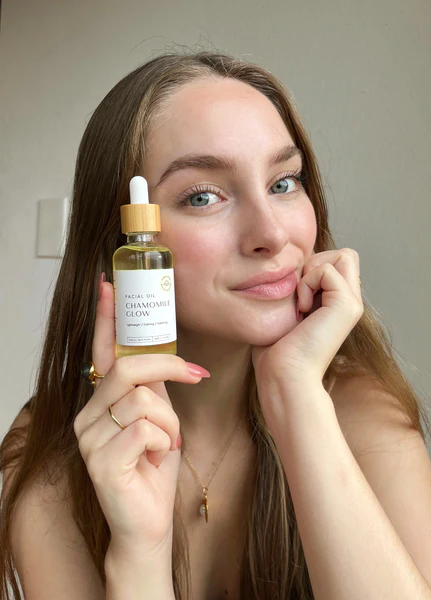
- Application is Everything: Never rub an oil vigorously. Pat 2-3 drops into the skin. If you look greasy after 10 minutes, you’ve used too much. In 2026, we aim for “dewy,” not “oil slick.”
How to Layer for Maximum Resilience
To maximize your Skin Recovery (R), follow the “Thin to Thick” rule:
- Cleanser
- Hydrating Toner
- Water-based Serum
- Moisturizer
- Facial Oil (This acts as the “seal” on the envelope).
Also Read : Skincare Gone Wrong: How to Identify and Treat a Facial Chemical Burn