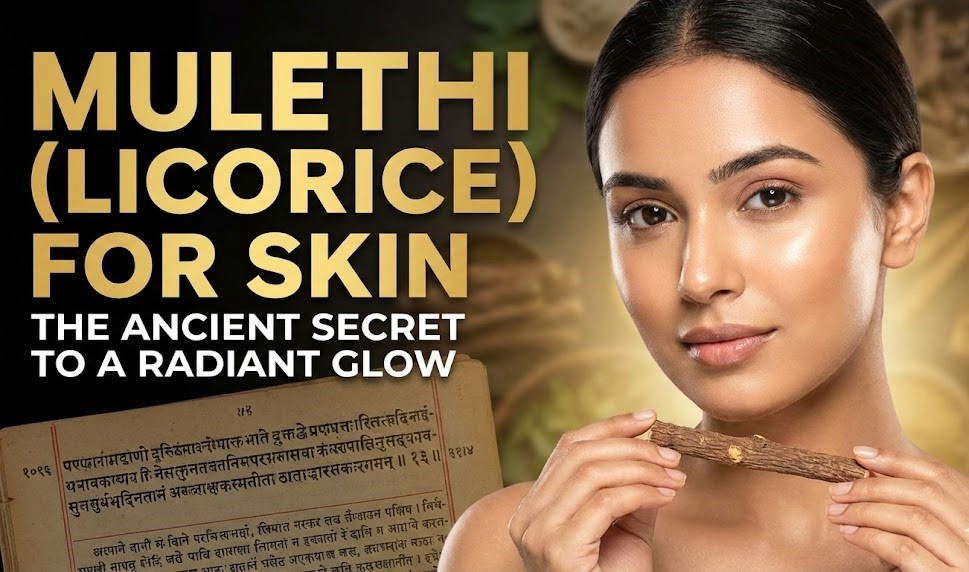

Mulethi, commonly known as Licorice, has been a staple in Indian kitchens for centuries. While our grandmothers swore by it for soothing sore throats, modern dermatology has now embraced this powerhouse herb as a “gold standard” for skin brightening and healing.
In a world filled with complex chemical exfoliants, Mulethi stands out as a gentle, natural alternative that rivals even the most expensive serums. If you are looking to fade dark spots, calm inflammation, or simply achieve that glass-skin glow, here is why Mulethi deserves a permanent spot in your 2026 skincare routine.
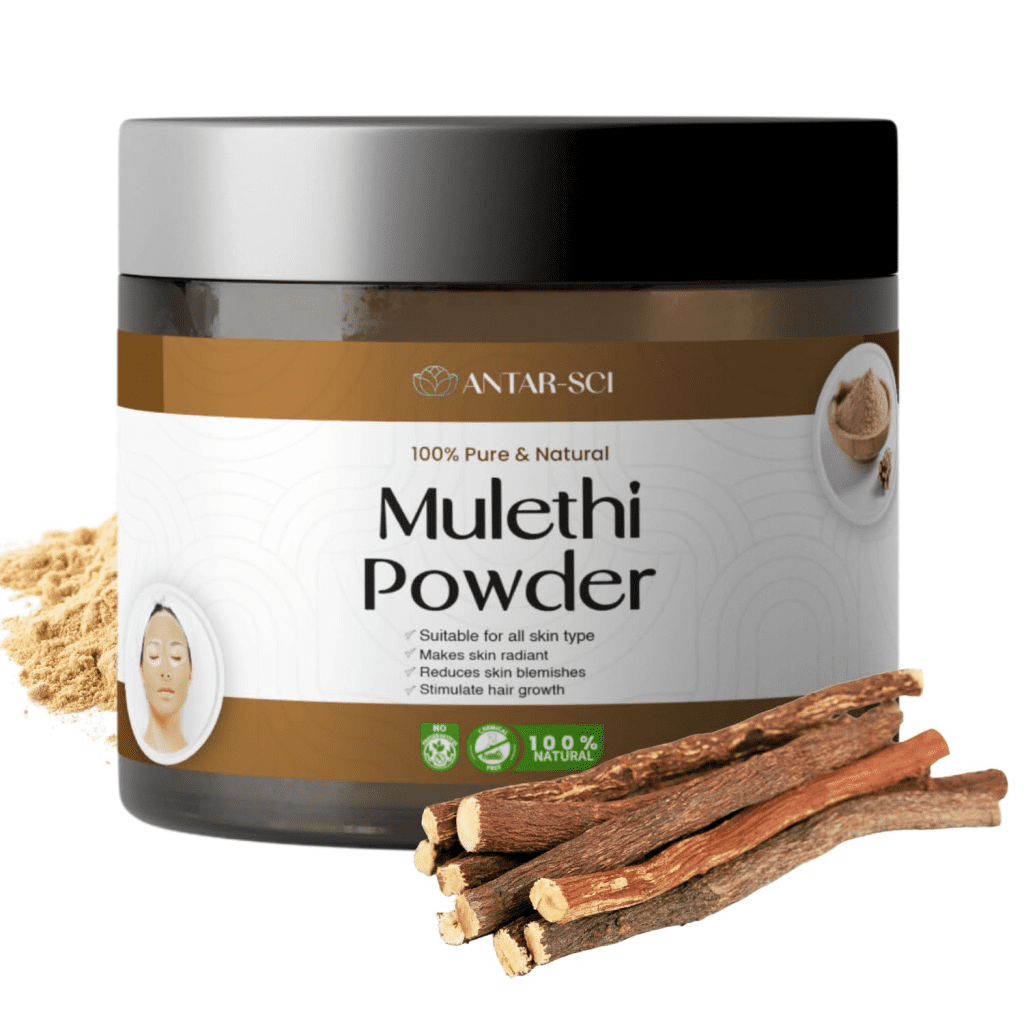
The Science: What Makes Mulethi So Powerful?
Mulethi (Glycyrrhiza glabra) is not just a tasty root; it is a chemical powerhouse. The secret lies in two potent compounds found within its extracts:
- Glabridin: Often compared to hydroquinone (a strong skin-bleaching agent), Glabridin naturally inhibits Tyrosinase, the enzyme responsible for producing dark pigment (melanin) in the skin. This makes it incredibly effective for fading sun spots and pigmentation without the harsh side effects of chemical bleaches.
- Glycyrrhizin: This compound gives licorice its sweet taste but also mimics cortisol in the body, providing powerful anti-inflammatory benefits that soothe redness, swelling, and acne irritation.
Top 5 Mulethi Benefits for Skin
Integrating this herb into your routine addresses multiple concerns simultaneously:
- Natural Skin Brightening By blocking melanin production, Mulethi actively fades hyperpigmentation and evens out skin tone. It is particularly effective for those stubborn post-acne marks that usually take months to disappear.
- Powerful Sun Protection Mulethi contains Glabrene, which helps prevent the skin from darkening after sun exposure. While it is not a replacement for SPF, applying it creates an extra layer of defense against UV-induced damage and free radicals.
- Controls Oil & Acne For those with oily skin, the Licochalcone in Mulethi helps regulate sebum production so your pores don’t get clogged. Its antibacterial properties also fight the bacteria that cause acne breakouts.
- Soothes Sensitive Skin If you suffer from eczema, rosacea, or general redness, Mulethi is a savior. Its cooling properties function similarly to hydrocortisone, calming itchy and inflamed skin almost instantly.
- Delays Signs of Aging Rich in antioxidants, Mulethi fights oxidative stress, which is the primary cause of fine lines and wrinkles. It plumps the skin and keeps it looking youthful and resilient.
Bonus: Benefits of Mulethi for Hair
Don’t limit this herb to just your face!
- Combats Hair Fall: Increases blood circulation to the scalp, nourishing hair follicles.
- Treats Dandruff: Its antibacterial nature clears scalp infections and flakes.
- Prevents Premature Graying: The antioxidants help prevent the oxidative stress that turns hair grey.
How to Incorporate Mulethi into Your Skincare Regimen
1. The DIY Brightening Mask
- Mix: 1 tablespoon of Mulethi powder with 1 tablespoon of raw honey (for dry skin) or rose water (for oily skin).
- Apply: Leave on your face for 15-20 minutes.
- Rinse: Wash off with lukewarm water to reveal instantly brighter skin.
2. The Exfoliating Scrub
Mix Mulethi powder with oats and yogurt. Gently massage this onto your face or body in circular motions to remove dead skin cells while simultaneously moisturizing.
3. Mulethi-Infused Products
If DIY isn’t your style, look for serums and toners that list Licorice Root Extract or Glycyrrhiza Glabra in their top ingredients.
- Recommendation: Try the Mamaearth Ubtan Face Wash which combines Turmeric and Saffron with nature’s best brighteners.
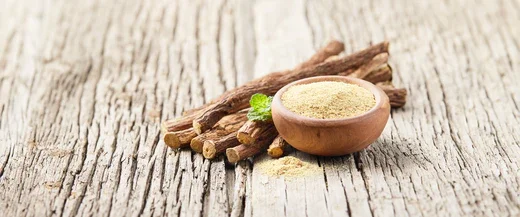
Precautions to Keep in Mind
While natural, Mulethi is potent.
- Patch Test: Always apply a small amount behind your ear 24 hours before using it on your face to check for allergies. The American Academy of Dermatology (AAD) recommends this step for any new botanical product.
- Sun Sensitivity: Although it helps repair sun damage, always wear sunscreen when using brightening agents to protect your fresh skin cells.
- Pregnancy: Consult your doctor before using concentrated licorice extracts if you are pregnant.
FAQs
Q: Can I use Mulethi powder on my face daily? A: Yes, in small amounts. However, using it 2-3 times a week as a mask is usually sufficient to see results without over-drying your skin.
Q: How long does it take to see results? A: With consistent use, you can expect to see a visible reduction in dark spots and a brighter complexion within 4-6 weeks.
Q: Is it suitable for all skin types? A: Yes. It hydrates dry skin, regulates oil in acne-prone skin, and soothes sensitive skin.
Conclusion
Mulethi is far more than just a kitchen spice; it is a time-tested Ayurvedic remedy that acts as a bridge between traditional healing and modern dermatology. By acting as a natural tyrosinase inhibitor, it offers a safe path to brighter, clearer skin without the harshness of synthetic chemicals.
Whether you choose to whip up a DIY mask in your kitchen or invest in MadeSafe Certified products that harness its power, consistency is key. Make Mulethi a regular part of your routine in 2026, and you will soon see why this “sweet root” is considered the ultimate secret for a flawless, radiant complexion.
Also Read : How to Treat Clogged Pores Naturally: Clear Skin at Home