
We’ve all had those mornings where the bathroom mirror seems to magnify every single tiny opening on our face. While you can’t actually “delete” your pores—they are biological essentials for releasing oil and sweat—you can absolutely architect your routine to make them effectively vanish. In 2026, we’re trading harsh “shrinking” myths for a sophisticated protocol that focuses on clarity, firmness, and structural integrity.
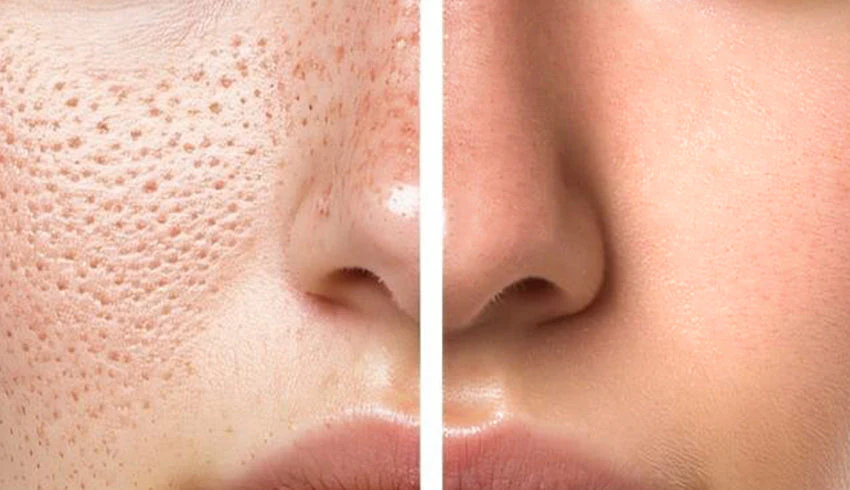
The “Clog-and-Expand” Cycle: Why Texture Matters
The most important thing to understand is that pores look largest when they are physically obstructed. When oil, dead skin, and debris get trapped, the pore stretches to accommodate the “plug,” making it much more visible. According to the American Academy of Dermatology (AAD), the first step to a smoother canvas is using products labeled non-comedogenic (oil-free).
Another major factor is loss of firmness. As we age or sustain sun damage, the “walls” of the pore lose the collagen support that keeps them tight and circular. When skin sags, pores take on an elongated, oval shape that is far more noticeable. Consistent use of broad-spectrum SPF 30+ is your primary defense against this structural collapse.
The Active Protocol: Your Step-by-Step Pore Reset
To refine your skin texture without causing the inflammation that actually makes pores look larger, follow this dermatologist-backed sequence:
- Step 1: Thermal Discipline & Gentle Cleansing. Wash your face twice daily using warm water. Avoid hot water, which triggers inflammation. Use a gentle, non-comedogenic cleanser to remove excess sebum without scrubbing.
- Step 2: Chemical Intervention (Salicylic Acid). If you struggle with acne or heavy oil, use a cleanser containing salicylic acid. This BHA dives into the pore to dissolve the “glue” holding clogs together.
- Step 3: Nightly Resurfacing (Retinol). Apply a retinol product before bed. It speeds up cell turnover and keeps the pore lining clear, though you should wait 30 minutes after washing to apply it if your skin is sensitive.
- Step 4: Safe Exfoliation. Incorporate a safe exfoliation routine 1–2 times a week. This prevents the buildup of dead skin cells before they have a chance to settle into your pores.
The Pore-Management Toolkit
| Ingredient/Action | Primary Benefit | Authority Source |
| Retinol | Increases collagen and prevents sagging | Mayo Clinic |
| Salicylic Acid | Unclogs deep-seated oil and debris | Cleveland Clinic |
| SPF 30+ | Protects structural firmness (collagen) | Skin Cancer Foundation |
| Non-Comedogenic | Ensures pores aren’t physically stretched | AAD |
The Visible Pore Index (VPI) Formula
Your Visible Pore Index ($V_p$) is a calculation of how much debris ($D$) and congestion ($C$) is sitting within the pore, contrasted against your skin’s elasticity ($E$) and the current level of inflammation ($I$).
$$V_p = \frac{D + C}{E – I}$$
By clearing debris and congestion (the numerator) and increasing elasticity while lowering irritation (the denominator), you achieve a significantly lower $V_p$, resulting in the “blurred” look we all crave.
Conclusion
In 2026, we’re retiring the idea of “shrinking” pores through force. Squeezing, picking, and aggressive scrubbing only lead to the inflammation that makes pores more prominent. Be kind to your skin barrier: use your retinol at night, shield your collagen with sunscreen every morning, and always look for that “non-comedogenic” label. Your pores are a sign that your skin is alive and functioning—with the right protocol, they’ll just be doing their job quietly in the background.
Also Read : Effective Skincare Routine for Teenagers