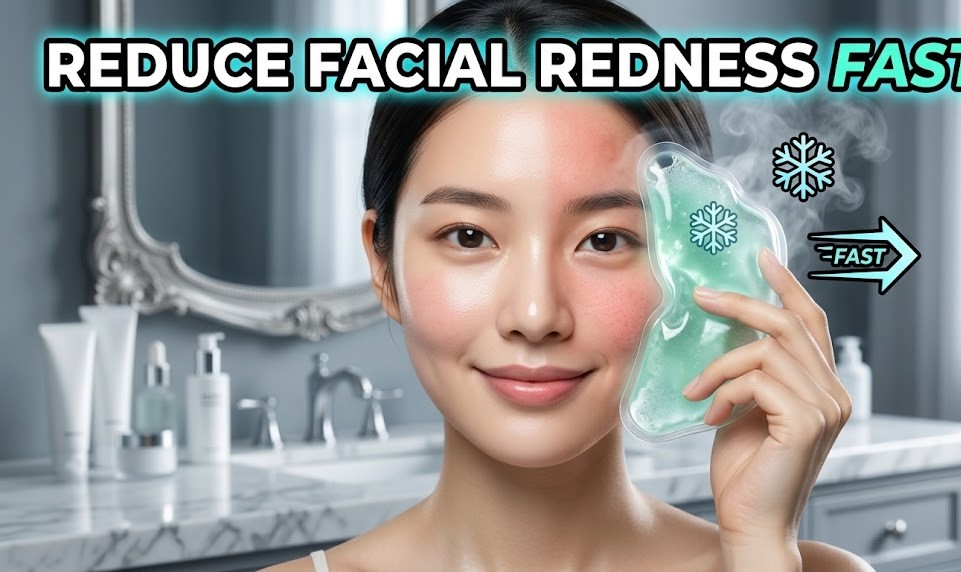

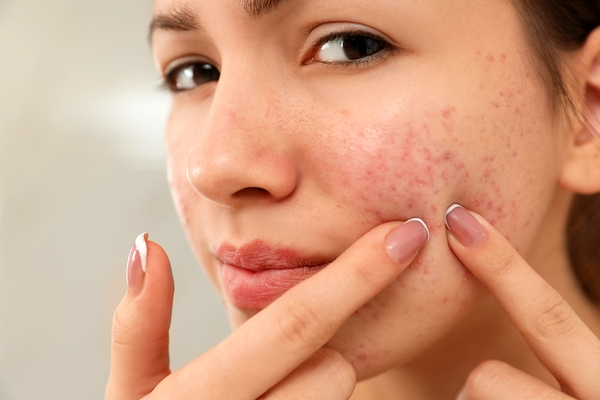
Facial redness is often your skin’s way of “shouting” that it’s overwhelmed. Whether it’s a sudden flush from a spicy curry, a reaction to 2026 urban pollutants, or chronic rosacea flare-ups, that distinctive reddish hue is usually driven by inflammation or dilated blood vessels. While it can be incredibly frustrating, calming your complexion doesn’t always require a high-end medical intervention.
In 2026, we focus on the Redness Reduction Index ($RRI$), which prioritizes cooling and barrier repair over aggressive treatments. By understanding the relationship between surface temperature ($T$) and vascular dilation ($V$), we can apply simple physics to soothe the skin:
$$RRI \propto \frac{1}{\Delta T \times V}$$
1. The Cold Compress Reset
One of the fastest ways to constrict blood vessels and reduce swelling is through a cold compress. This is essentially an “emergency brake” for inflamed skin. Applying a cool compress or chilled green tea bag helps to draw heat out of the tissue instantly. Just remember: never apply ice directly to your face, as it can cause “cold burns” and further damage the barrier.
2. Barrier-Restoring Moisturizers
When your skin is red, your barrier is likely “leaking” moisture. You need ingredients that act as a restorative mortar. Look for Niacinamide (Vitamin B3) to soothe sensitivity and Centella Asiatica (Cica) to speed up the healing process. These ingredients help lower the skin’s reactivity and prevent future “spicy” sensations.
3. Neutralize with Green Tints
If you need an immediate visual fix for a meeting or event, lean into color theory. Since green and red are opposites on the color wheel, green-tinted primers or moisturizers can effectively “cancel out” the redness. It provides an instant camouflage while the active ingredients underneath work on the actual inflammation.
4. Identify and Avoid Triggers
Skincare is only half the battle; the other half is lifestyle management. For many, redness is triggered by diet (spicy foods, red wine), extreme temperatures, or stress. Keeping a “skin diary” is a great way to identify your specific rosacea triggers so you can avoid them before the flush begins.
5. The “Cool Down” Face Mask
Once or twice a week, treat your skin to a calming ritual. Ingredients like colloidal oatmeal are clinically proven to relieve itching and redness. A mask containing cucumber or chamomile can also provide a refreshing reset for a complexion that’s been exposed to the sun or wind.
Redness-Reducing Ingredient Guide
| Ingredient | Primary Benefit | Best Form |
| Aloe Vera | Instant cooling & hydration | Gel or Mist |
| Niacinamide | Strengthens barrier, reduces blotchiness | Serum |
| Ceramides | Repairs the lipid “wall” of the skin | Cream |
| Cica (Centella) | Intense healing for irritated skin | “Cica-balm” |
| Cucumber | Naturally refreshes and de-puffs | Sheet Mask |
Conclusion
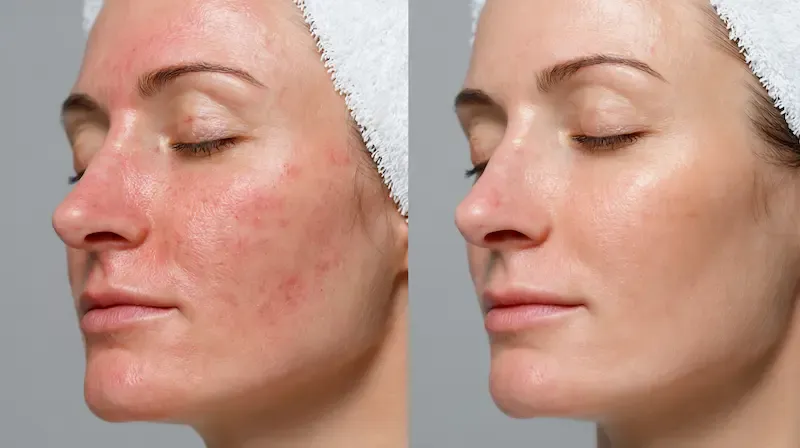
Facial redness doesn’t have to be a permanent part of your look. By combining fast-acting cooling techniques with long-term barrier support, you can significantly reduce inflammation and reclaim a calm, clear complexion. In 2026, the best skincare is often the gentlest—focusing on protection and hydration rather than “scrubbing away” the problem. Consistency and trigger avoidance are your best allies in keeping the “heat” off your face.
Also Read : Skincare Routine for Mature Oily Skin: Control & Nourish