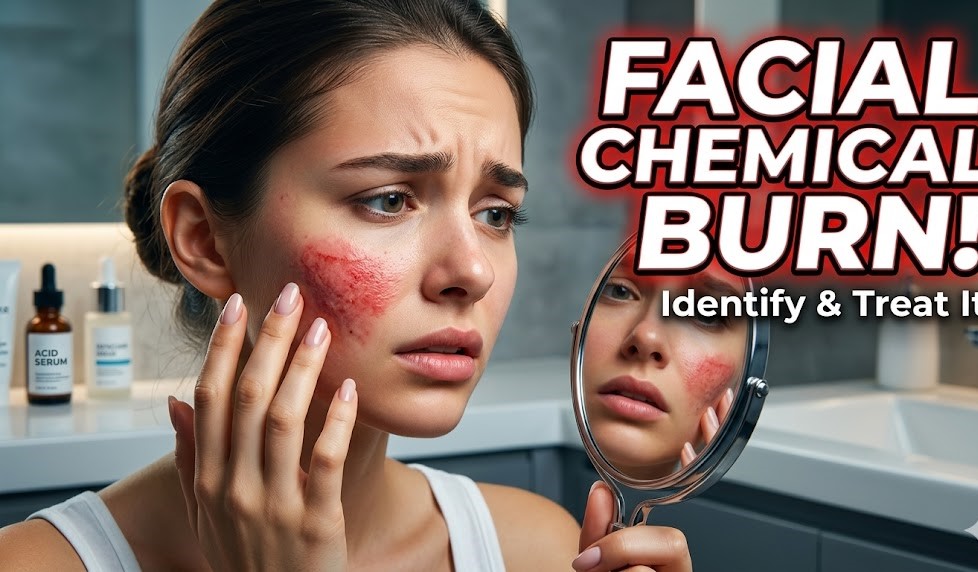

We’ve all been there: you’re chasing that legendary 2026 “glass skin” glow, you try a new 30% AHA peel, and suddenly your face feels less like a spa day and more like a five-alarm fire. In the world of active skincare, the line between “effective exfoliation” and a chemical burn is thinner than we’d like to admit. If your skin is stinging, peeling, or blistering, it’s time to stop the “beauty is pain” mantra and switch to emergency recovery mode.
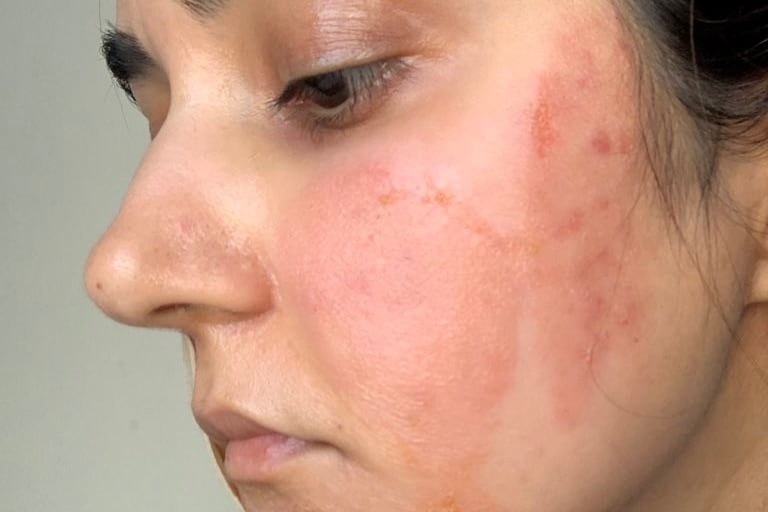
The First Aid Protocol
If you feel a sharp burning sensation, intense pain, or notice sudden discoloration, do not wait. Immediate first aid for chemical burns is critical.
- Remove the Irritant: Immediately wash the area with clean, running water for at least 20 minutes.
- Angle Your Head: If the product is on your face, tilt your head over a sink so the runoff doesn’t get into your eyes or ears.
- Skip the “Neutralizers”: Don’t try to balance an acid with a base (like baking soda); the resulting chemical reaction can generate heat and worsen the burn. Stick to plain, cool water.
The Usual Culprits: AHAs, BHAs, and Retinol
Most facial burns from skincare are caused by the improper use of Alpha Hydroxy Acids (AHAs) or Beta Hydroxy Acids (BHAs). These chemicals work by dissolving the cellular “glue” of the skin. While they are great for texture, using a concentration ($C$) that is too high can lead to tissue damage:
$$C = \frac{m_{solute}}{V_{solution}} \times 100\%$$
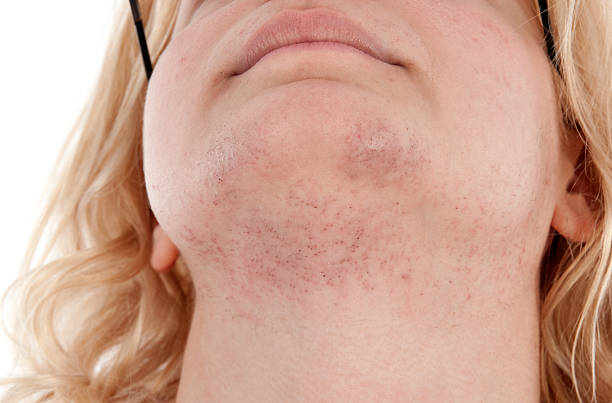
If $C$ exceeds your skin’s tolerance, you move from exfoliation into a chemical burn from AHAs or BHAs. Similarly, retinoid irritation (often called “retinol burn”) can cause redness and peeling, though it is technically a form of severe contact dermatitis rather than a true caustic burn. Both conditions leave your skin barrier compromised and highly susceptible to infection and UV damage.
Healing and Recovery
Once the initial burn is neutralized, your focus shifts to “slugging” and protection.
- Keep it Greasy: Apply a thin layer of white petroleum jelly (Vaseline) to the area. This creates an occlusive seal that prevents water loss and keeps bacteria out.
- Strip the Routine: Stop using all “actives”—no vitamin C, no acids, and no scents. Use only a very gentle, soap-free cleanser.
- Sun Shielding: Your skin is now hypersensitive to light. You must wear a physical (mineral) sunscreen every single day, as sunburn on a chemical burn can lead to permanent scarring or hyperpigmentation.
Conclusion
Facial chemical burns are a stark reminder that “more” is not always “better” in skincare. While acids and retinoids are powerful tools for achieving a clear complexion, they must be respected and introduced slowly. If you experience blistering, severe swelling, or a rash that spreads rapidly, seek professional medical help immediately. Your skin has a remarkable ability to heal, but only if you give it the moisture, protection, and silence it needs to recover from a chemical trauma.
Also Read : How to Store Skincare Products Properly: Maximize Shelf Life